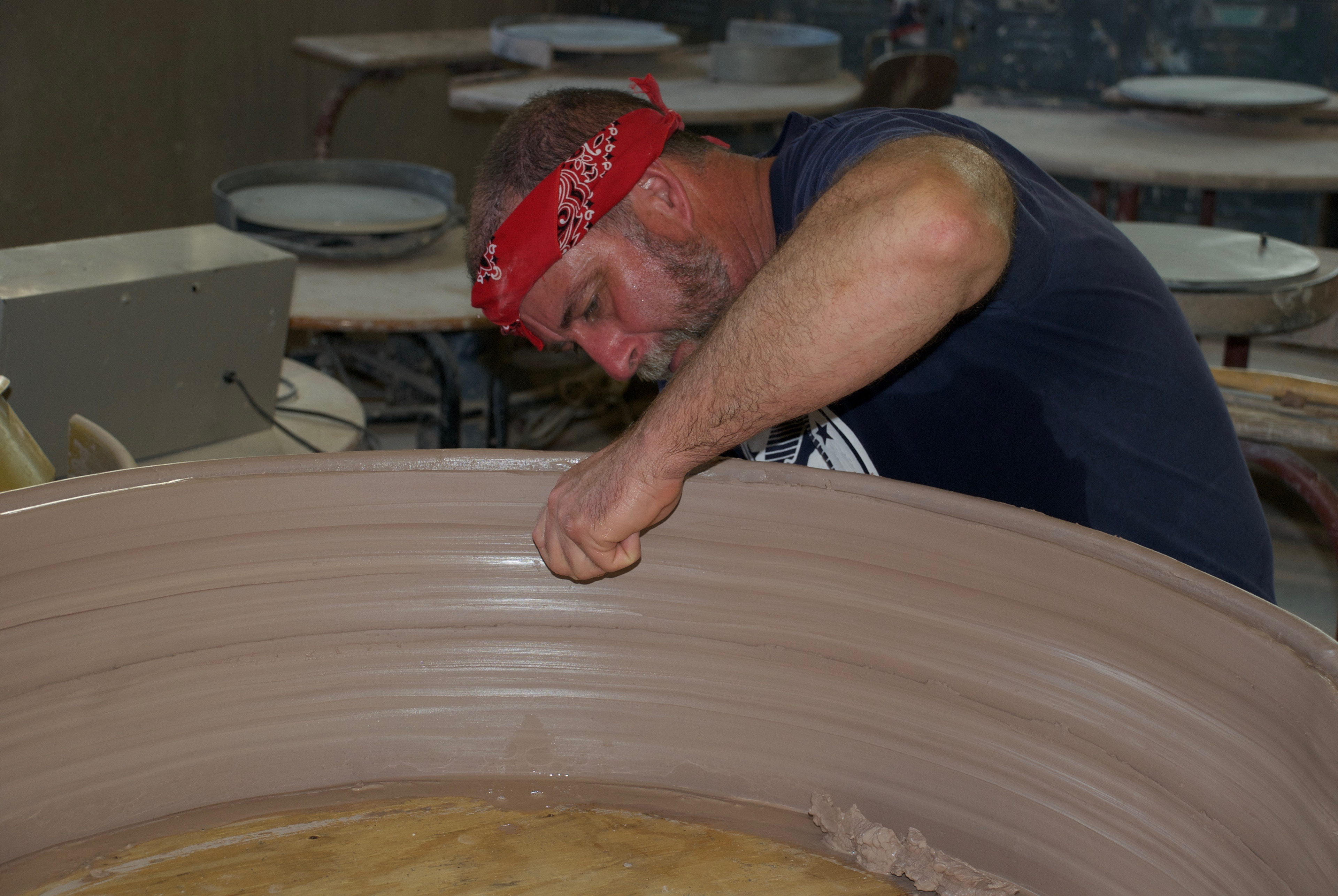
Bio
Scott Meyer earned a PHD from the Pennsylvania State University where ceramics became his focus. His Eastern approach to wheel throwing and the vessel still informs his sculpture, often realizing his forms in the wood-fired kilns he designed and built at UM.
Meyer has headed the University of Montevallo ceramics program for over forty years. His teaching philosophy structures an apprentice-like dynamic where students learn by assisting (EG in glaze and clay formulation, loading/unloading kilns and at times designing and constructing the facility). A requisite foundation experience on the wheel is followed by an advanced sequence of hand-building, mold-making, throwing, and alternative approaches. With wood splitting and anagama prep. responsibilities, the community resembles a team.
He has won numerous awards both for his art and his teaching including two Alabama State Council on the Arts Fellowship Grants, The UM College of Fine Arts Distinguished Teacher Award, The UM National Alumni Lifetime Teaching Award as well as the UM University Scholar lifetime designation.
His work has been exhibited in galleries and museums throughout the United States and, most recently featured in two solo exhibitions at the Sanyi Contemporary Ceramics Gallery, the Chin Chin Ceramics Gallery and a solo exhibition at the Yingge Museum of Ceramic Art in Taipei, all in Taiwan. He is a founding member of The Crucible Project in which established artists in ceramic and glass formed a collaborative team, with work most recently shown in The Montgomery Museum of Art in Alabama. His work is included in the Ohi Museum of Ceramic Art in Kanazawa, Japan, the Notre Dame Museum of Art and in many private collections. In 2024 he was an invited artist at Jing Clay Art Formosa Art Center in Taiwan. While there he also lectured and conducted workshops at the Tainan National University of the Arts. Meyer regularly hosts national and international ceramic artists, often with unique and untested approaches. In 2023, with the assistance of the UM Mass Communications Department, he fired his anagama simultaneously with three other kilns in the world including two in China. Called World Fire, the project sought to facilitate new ways of sharing techniques in real time.
Meyer’s work has been featured in most ceramic journals including Ceramics Monthly, Sculpture Magazine and Ceramics: Art and Perception. He has also authored numerous articles in the field as well as the Richard Hirsch biography, With Fire, A Life Between Chance and Design
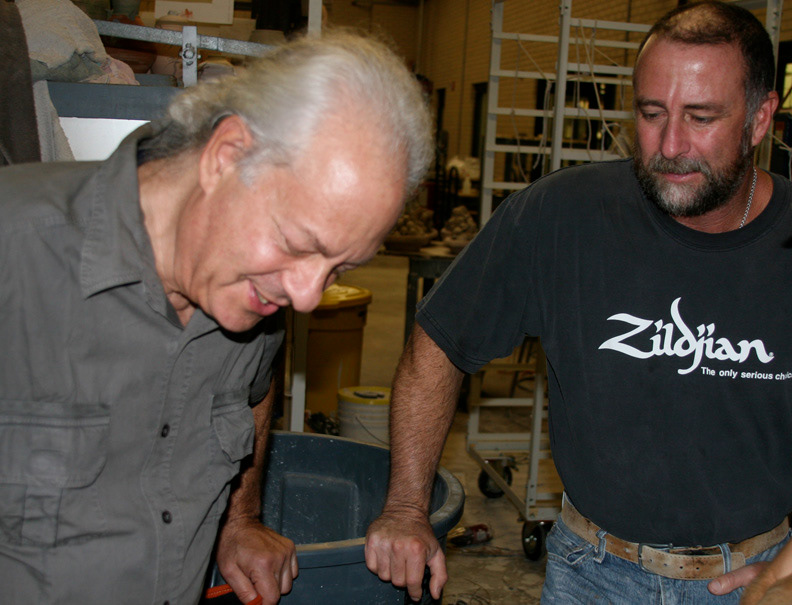
Meyer with Hirsch
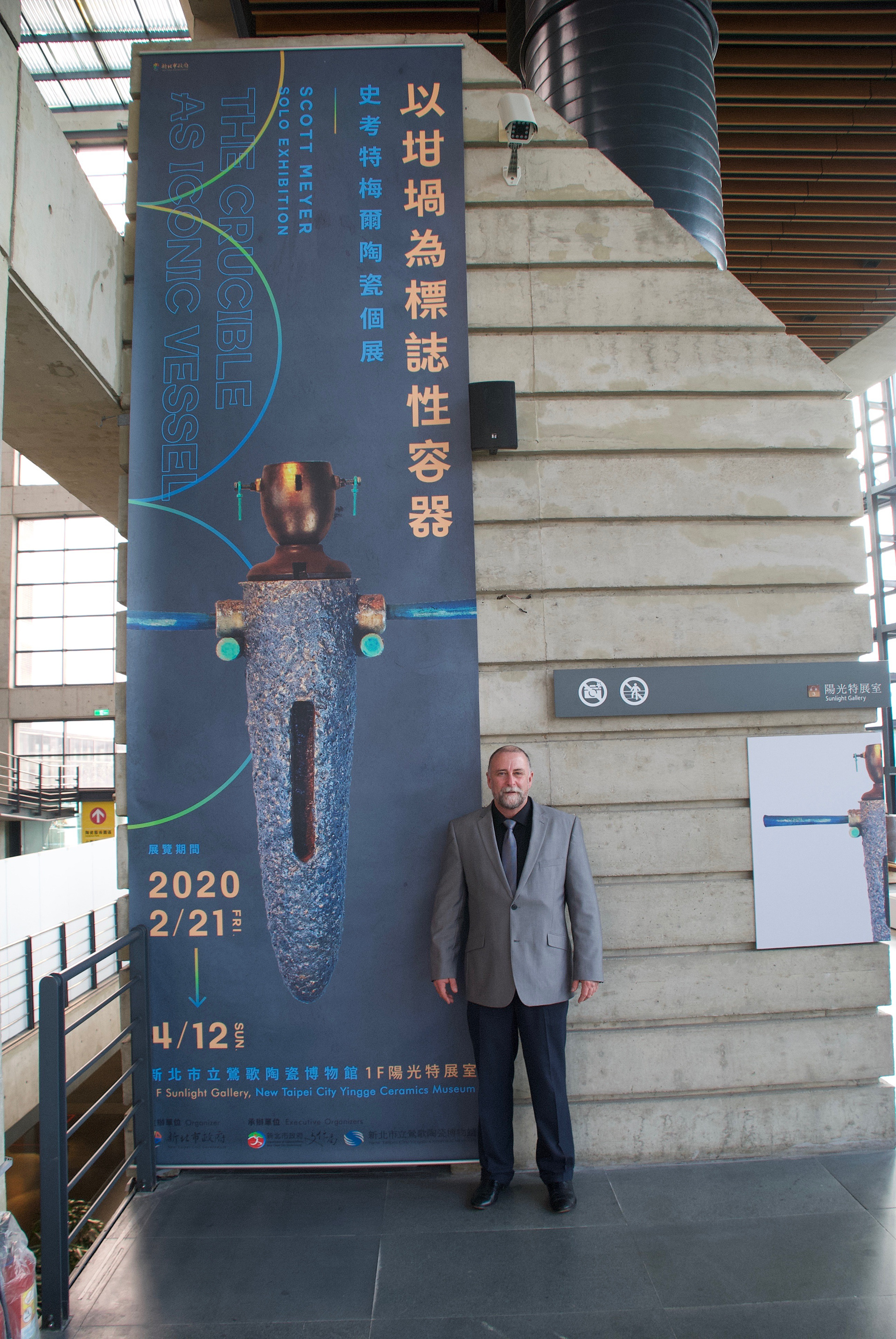
Meyer at Yingge Museum of Ceramic Art Solo Exhibition
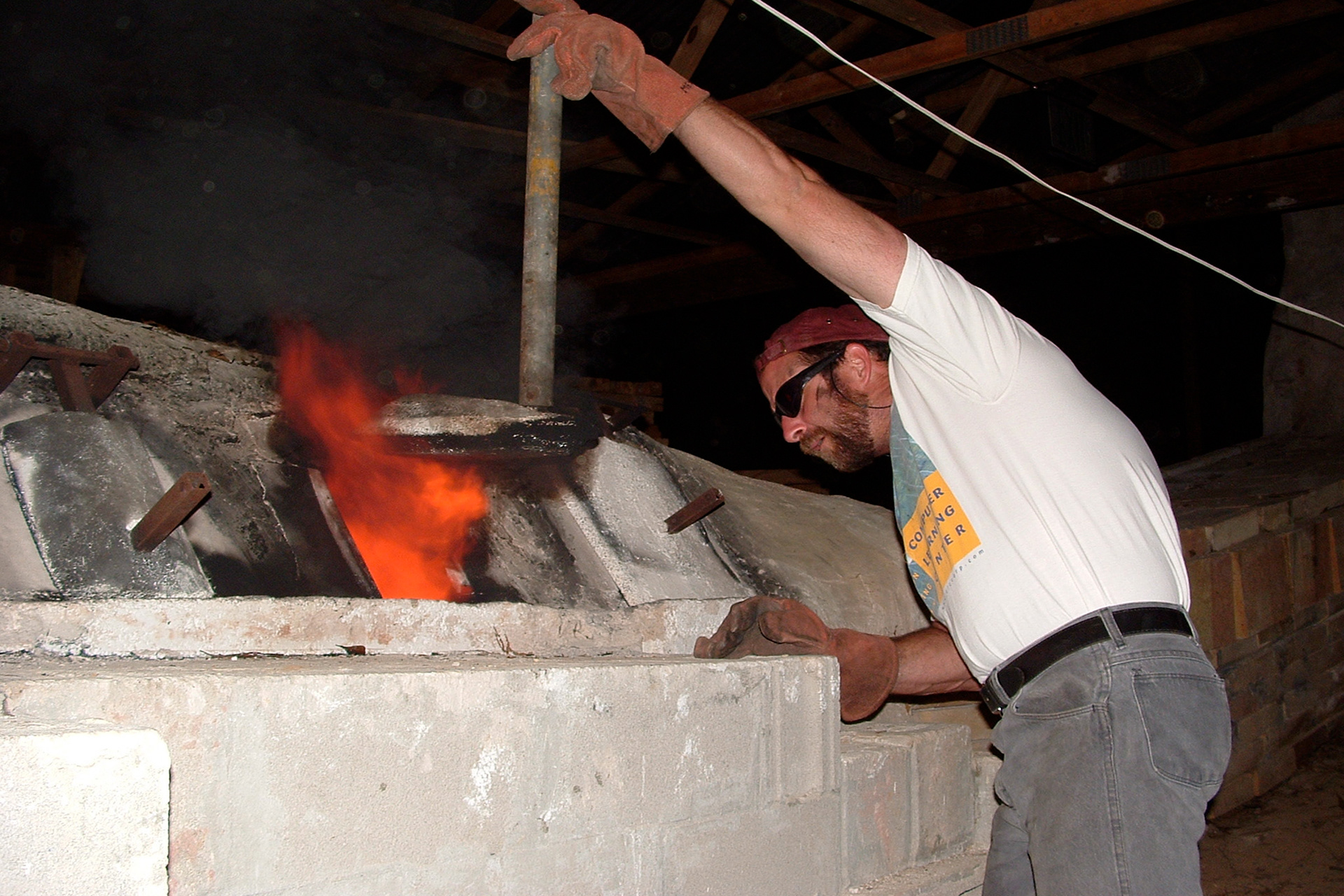
Meyer checking stoke hole at UM anagama kiln
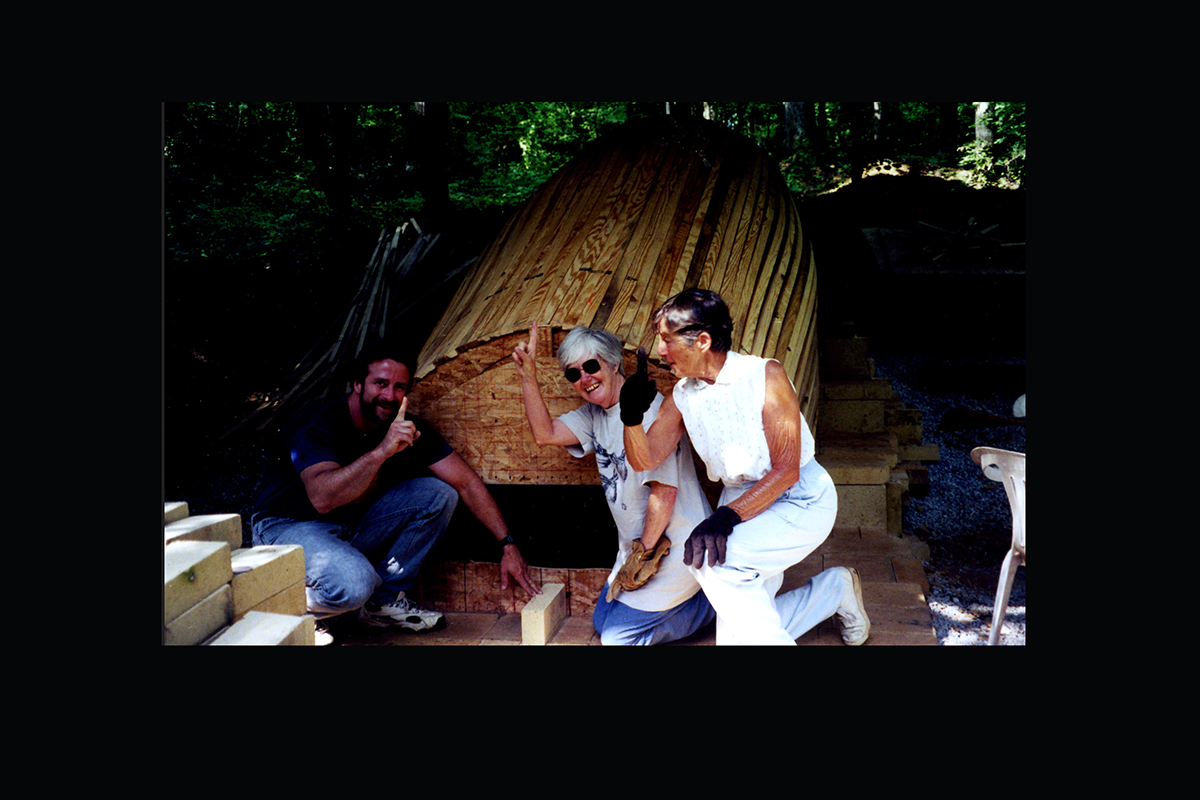
Meyer, Sister Adrian, and Poppy Meyer installing the first brick on the anagama
Artist Statement
Scott Meyer came to ceramic art through the discipline of wheel throwing, in an environment that celebrated Asian aesthetics and a sensitivity to the voice of materials. His work typically selects a universally known object (a cup, a house, a signpost, a mandala symbol, a crucible) and introduces additional contexts in which the object reveals aspects of its character through process. In this pursuit, the forty-foot anagama he built at the University of Montevallo provides a catalyst for revealing the essence of the material. The wood-fired aesthetic evokes a sense of utility and wear over time. His forms are typically realized as assemblies composed of elements joined after firing, extending his creative process beyond the kiln
Meyer’s current work involves two series. In one, a deconstructed bottle form is housed in a wall-mounted environment that often alludes to architecture and kiln dynamics. In the other a crucible form is halved, revealing a geologic vocabulary and the congealed, embedded mass to which it gave shape and surface. In both series, Meyer is increasingly influenced by the “Sodeisha” group of Japanese sculptors where visually quiet forms and surfaces evoke a poignant primal presence.